Weeknote w/c 4 February: hats and making change human

A slightly briefer weeknote than normal because my week was partly spent with my school governor / trustee hat on. I find this very valuable experience as it gives me a different perspective on public service delivery and it’s rewarding to have the opportunity to play a part in helping to make sure that the schools our trust is responsible for are providing an inspiring education for the children in spite of the challenges presented by changes to the education system and funding.

Thinking about how we change the way we work

I had a useful discussion mid-week with our chief exec and some other senior colleagues, talking through some of the challenges and opportunities we need to consider as we look to embrace collaborative and flexible ways of working across the organisation, enabled by better technology. One of the points we discussed was the trade off between efficiency and consistency, and people being able to work in a way that suits their personal preferences. Personally, I prefer to be ‘lighter touch’ in the rules we apply and to let people adapt their working styles in ways that work best for them and their teams. But it made for an interesting discussion as the benefits of a more flexible approach tend to be harder to boil down into clear measures of success.

DMT – shifting our focus

We’re having some useful conversations about how we can make sure that we’re using our DMT meetings to best effect. Our operational meetings are intended to make sure that we’re keeping on top of the key areas of our performance across the service, but it feels like we need to do a bit more work on this. I think they key is for us to make sure that we have a shared picture of our performance, are making sure that we celebrate progress and success (which I find can get lost if we’re not careful) and are focusing together on the things we need to do as a team to help address underlying factors that might be making it difficult for our teams to make progress.

Other highlights from my last couple of weeks were:

  • Our quarterly information governance group meeting, which included positive progress and growing collaboration with services to embed good information management practices.
  • An update on the work our team are doing to update our asset management for IT equipment. With our imminent refresh of PCs and laptops it’s really important that we get this right and I was encouraged by the progress.
  • A couple of useful discussions looking at how we can support leaders across the Council in learning more about how digital approaches, technology and data can help them develop their service improvement and transformation strategies. I think it’s important that this doesn’t fall into the trap of looking like a fad that we’re trying to impose on our colleagues and we talked through ways that we can make the concepts relevant and useful.
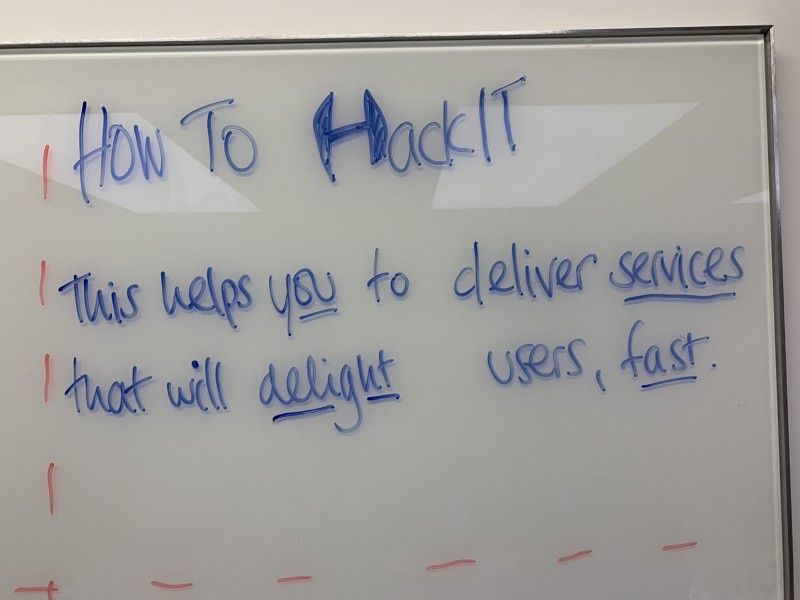
  • I was pleased that a number of colleagues mentioned that they’re looking at writing up ‘How to HackIT’ guides that we can use to help develop our governance approach and working practices across the team. And this reminded me that I’m feeling guilty about being slow with my part of that… Something I need to fix this week.
  • And linking in with the discussion about helping colleagues use technology to modernise ways of working in their teams, I was pleased to wrap up the week with a very encouraging catch up with Tom and a colleague from a team in public realm and catching up with the work they’ve been doing together to use Drive to help make information accessible from any device, anywhere, any time.

Something I’m learning

Coming back to my school governor / trustee work, this presents an interesting challenge in terms of the different roles I have, as I am both a trustee of a small multi-academy trust and also chair of governors at an individual school within the trust. This means that I am learning to remember which hat I’m wearing, as in some of the work my responsibility is directly for one school whereas in other meetings I need to focus on the trust as a whole. The two aren’t fundamentally in conflict but there are some decisions where the right choice for the trust might not always be the most popular at the local level.

w/c 21 and 28 January: sniffles and a bit of culture

Two weeknotes in one. Partly because I took a day off to do Cultural Things and partly because I spent last week feeling sorry for myself while I battled with a cold. I’m pleased to report that copious doses of hot Ribena have had the desired effect and I’m feeling much better this week.

Feedback from Members

I had the opportunity to give updates on our team’s work to elected Members at the Council’s Scrutiny Panel and Audit Committee over the last fortnight. Both of these conversations were very encouraging and I was especially pleased to hear Members giving positive feedback about the work we’ve done together with our colleagues in fostering and housing. Our elected Members are an important link with our residents and it was positive to hear that they’re getting good feedback about the impact of the work we’re doing.

I was asked some good questions about how we are working to make sure that we are designing inclusive services and how we’re building partnerships with colleagues in other service areas to make sure that Hackney is being ambitious and looking to maximise the positive impact that digital service design, technology and data can have for our residents. It was good to have plenty of examples to refer to which illustrated how we’re meeting these challenges.

(For anyone who enjoys reading Council reports, the reports I took are here: http://mginternet.hackney.gov.uk/documents/s63672/20190121%20Scrutiny%20ICT%20and%20digital.pdf and here: http://mginternet.hackney.gov.uk/documents/s63751/20190128%20Audit%20Sub%20Committee%20report%20ICT%20update.pdf).

Linking up with other services

Last Monday we had a joint management team session with colleagues in the Council’s Strategy, Policy & Economic Development division. This was a good opportunity to look at ways that we might work together to be ‘more than the sum of our parts’ and we used the 1–2–4-All approach to distill out a small set of ideas that we can explore further together over the next month. The ideas we agreed to focus on were:

How might we…?

  • Build on our work focussing on user needs to design equalities and sustainability into services
  • Grow a network of enthusiastic change practitioners
  • Help colleagues with insight into political leadership and the ‘golden thread’ between the work they are delivering and the corporate plan
  • Develop deliberative and accountable approaches for community engagement

We identified groups of 2 or 3 people who are going to explore each of these through quick, targeted actions and have agreed that we will get back together for a follow up session at the end of the month to reflect on what we’ve learned through that.

This discussion links with a report that I read a few years ago and thought was interesting, suggesting that support services should be seen as ‘force multipliers’ for ‘frontline’ services (https://drive.google.com/open?id=1_XZW4DHCz2IlfqFH8z2f6cnHVPik7-HH). It’s become fashionable to talk about ‘back office’ services as overheads that aren’t core to service delivery, but I think this misses the really important point that, done well, support services can liberate time and add focus to ‘frontline’ service delivery and if they’re not working well ‘back office’ services can have a significant negative impact on the ‘frontline’. I think it’s really important to define our success as being measured by the impact that we have together on delivering services to our residents, not simply carrying out our different professional disciplines.

Other highlights from my last couple of weeks were:

  • An interesting conversation about data and analytics with Liz and colleagues from Camden and Waltham Forest.
  • Good progress with colleagues in housing, agreeing how we will update our governance arrangements to help maintain the momentum that has been built for the work we’re doing together.
  • Joining the One Team Gov breakfast that Cate organised in our Town Hall, which included interesting conversations about public service reform and culture change.
  • The end of Discovery for our project to explore the Hackney Spacebank manifesto pledge. The team have done great work digging into the opportunities and challenges, and we’ve agreed to move forward into an alpha stage that will test out some prototypes for ways we might deliver on this.
  • Introducing Cllr Carole Williams (Hackney’s lead for employment and skills) to some of our new apprentices and a great conversation talking about the different things they had done before they joined Hackney and their thoughts on starting work with the Council.
  • A great catch up with the director for another service which included very positive feedback about the ways that our teams are working together to help shape and deliver transformed services for our residents.
  • Meeting some new colleagues from other services as part of the ‘Let’s Network Hackney’ introductions programme, which was also a good opportunity to show them how we can use video meetings to meet up even if we’re not in the same location (I was working from home shaking off my cold).
  • Some really inspiring progress updates from the work with colleagues in Temporary Accommodation which Matthew shared with me. This is a really important part of the Council’s work and I was incredibly impressed by the work that the teams have done together.
  • Intro meetings with Matthew and Bukky from our development team and Susan and John from our Print team, finding out about how their experiences of joining our team and what they were doing before they joined Hackney.

Something I’m learning

Like @Cate (https://weeknot.es/weeknotes-47-skills-talent-and-practise-3e8b33c37b66) I went to the Tate Modern to see the exhibition of Anni Albers’ work. As well as being impressed by the quality and detail of her work and finding the history of her life very interesting, there were also a few things I noticed that I found thought provoking.

The first was the observation that Anni made to her students about the importance of understanding how products will be manufactured in factories once the design part is done and thinking that through from the beginning of a piece of work. I liked the respect this showed for the whole process of making a thing, not just the ‘glamorous’ artistic bit. I also thought it was interesting to see the photos of textile factories from the 1950s and 60s, which I thought had interesting parallels with the discussions about robots taking over people’s work that you read in today’s media.

I also liked looking at the letters and correspondence that the Tate put on display as part of the exhibition. I thought it was interesting to see how brief some of them were — much more along the lines of what we’d put into a text message these days, whereas in my mind I’d expect an actual letter to be a much longer piece of prose.

w/c 14 January: getting partnerships right

The year is well underway and I’m now well into my annual ‘is it too far into January to still be wishing people happy new year?’ quandary. But 2019 has had plenty of variety so far, which is making for a good start to the year.

We’re continuing to focus on the January priorities that we set at our management team meeting at the start of the month. For me that’s meant taking time with Henry and Ollie to look at the work to refresh our ageing PCs and laptops; with Matthew looking at ways we can make sure we’re helping colleagues get the most from the new productivity tools we’ve been deploying; and working on our thinking for moving forward with some of the work we outlined at our November away day.

Feedback

A colleague asked for a chat about something that I’d included in my last weeknote and it turned out that I’d used some terminology in a way that had caused a bit of concern and confusion (I think I’d picked up the wrong term). I was really pleased about this. It’s always encouraging to know that someone’s reading my weeknotes and this felt like an example of them being effective. Through sharing work in the open we were able to spot a misunderstanding quickly, talk together to clarify what we were doing and make sure that we’re all pointing in the same direction.

Building confident relationships with our colleagues

Something that’s really important to me is that we (ICT) work in a partnership of equal status with our colleagues in other services. I don’t like terms like ‘the business’, as that’s often used in a way that suggests that ICT are not part of the business, and I am keen to avoid us getting into a customer / supplier relationship with our colleagues because that disempowers us and can limit our contribution to driving improvement (and we all share the same customer – our residents). But it’s also important that we are working as partners and are seen to be listening and responding to priorities, pressures and concerns in the services we’re working with.

This month there have been a couple of examples of where we’ve had to test this approach – making sure that we’re standing up for principles that are important to us but also staying in listening mode and making sure that we don’t get locked into squabbles with colleagues. One of these relates to lack of familiarity with delivering change using an Agile approach and the other a proposed software decision which feels a bit rushed.

I’ve been encouraged by the progress with these and it feels like we’ve taken some steps forward in developing mutual understanding. My hunch is that neither is going to result in the ideal outcome that we would like if it was just down to us, but where a compromise is needed I think we’ll have a better understanding of why that needs to be the case and will have also strengthened our working relationship with our peers.

Other highlights from my week were:

  • Starting the week at the GDS offices in Whitechapel looking at the leadership training that they’re developing to support the Local Digital Declaration and sharing thoughts and experience to help shape that.
  • A good discussion with colleagues from other councils and the Ministry of Housing, Communities & Local Government agreeing how we will move forward with the next steps of development for the Pipeline collaboration platform.
  • Cate and I went to the management board to share our thinking on future models for mobile telephony provision. This was a productive discussion and we got a helpful steer which we’ll be using to develop a more detailed recommendation to take back in a few weeks time.
  • Planning a joint Divisional Management Team meeting with colleagues in another service – which we’re hoping to use as an opportunity to develop thinking for ways that central services can work together to help colleagues in other areas drive change and further improvement in their services.
  • Wrapping up the week with an excellent discussion with Catherine Howe and her team from Cancer Research, comparing notes and identifying areas that we might continue to learn from one another’s experiences and share thinking as we develop our work.

Something I’m learning

I instinctively avoid conflict where possible, which often makes me wonder whether I’m reaching reasonable compromises or whether I ought to push harder for things I think are important. The discussions I mentioned above have been a good opportunity to test how I’m getting on with learning to strike the right balance.

w/c 7 January: so, what do I actually do?

I skipped a week, so here’s my first weeknote of 2019. Happy new year!

What do I actually do?

I try to make sure that I meet with everyone who joins our team within the first month of them starting and during a recent one of these welcome meetings I was asked what I do in my role. I thought that was a really good question and I’ve found thinking about the answer a useful exercise.

The first response that sprang to mind was email and admin. I try to batch up the myriad approvals and requests to review documents that I receive and work through those first thing every morning. This helps me focus on the things I want to get done during the rest of the day, but I always find it a bit of a challenge to keep myself focused on things that are important and avoid getting distracted with catching up with day to day stuff.

Then I thought about a range of the more valuable things that I spend time on. These include reviewing budgets, plans and progress updates, making myself available to help people with problems they’re trying to think through * and looking at ideas that colleagues are developing to help me keep in touch with the work we’re doing and able to make sure that we’re heading in the right direction.

But having mulled it over during the Christmas break ** I’ve concluded that the most important thing I do is paying attention to the intersections between teams and their work. These are the spaces where work can become disproportionately complex and where tensions between teams can arise. I think that a key responsibility of management is to be mindful of this and make sure that as well as setting the direction for the service as a whole we’re also checking that we are creating the conditions for success and supporting our teams in their delivery by looking for ways that we can configure our work so that everyone is able to keep up the level of pace and quality of results that we’re aiming for.

* I talked about that in this recent post: https://bytherye.com/2018/12/11/personal-reflections-on-how-i-prefer-to-work/.

** Hackney has a brilliant set up for Christmas where the Council shuts down between Christmas and New Year. Critical services continue to operate and our team still run an on-call service (and I also had a couple of days on duty as the ‘gold’ officer responsible for the Council’s response to any major crises), but most of the day to day ‘business as usual’ takes a pause for a few days. This means that your email box isn’t filling up with a ready made backlog for the return to work and makes the Christmas period a real break – as a result I feel that I’ve started the new year properly refreshed.

Refining our management team approach

Having thought that through I’ve realised that we haven’t been spending enough of our management team time looking at those intersections. We’re not ignoring them, but having talked it through with Cate, Henry and Matthew we thought we could do more to make this core to our rhythm of work and take a more structured approach to intervening in areas most in need of support. With that in mind we’ve now agreed to rejig our management team cycle along the following lines:

  • Our first meeting of the month (we have two each month) will retain the usual more operational focus. We’ll use these to track our service performance and other key operational areas such as our budgets, audit follow up and risk management. Not the most exciting parts of our work, but important parts of knowing our business nonetheless.
  • The second of our monthly management team meetings will have a delivery focus, using a more open workshop approach to identify key cross-cutting areas for our attention and identifying ways to address these with a focus on actions we can take within a 30 day timeframe. The goal for this is not to create a parallel universe of projects outside of our main portfolio of work, but to make sure that we are helping to keep the delivery of key initiatives on track and working well.
  • Finally, we’ll design our quarterly strategy days to include a wider set of colleagues from across the team (as we did for the recent one at the end of November: https://bytherye.com/2018/12/01/weeknote-20181201/), using these to dig into bigger strategic topics and make sure that we’re continuing to grow the impact and contribution that our service is making across the Council, helping to deliver services so good people prefer to use them.

We got the ball rolling by taking a workshop focus for last week’s management meeting and deciding on the areas that we want to focus on for January. I’m pleased with the shape that’s taken and am hopeful that it will help us make 2019 even more successful than 2018.

Looking back at the week before Christmas and the ten days since New Year, my other highlights were:

  • A session with colleagues from other councils looking at our different strategic approaches for our business systems and how we harness these to deliver great services for users. We didn’t define a blueprint, but it was great to talk through our common challenges together and tease out some of our thinking.
  • My first attempt at Wardley mapping, working with a group of HackIT colleagues and people from the Government Digital Service and Crown Commercial Service to see how this technique can help us understand challenges we are working on.
  • A good show and tell presented by the team who are working on improving our asset management practices. It was encouraging to see that they have developed a clear picture of the data that matters and identified where our service processes need to be redesigned to maintain good data quality.
  • Looking at our telephony provision, including exploring ways that we might better meet our users’ needs for mobile telephony. Cate and I worked together on some further development of our thinking and we’re hoping to get feedback from the management board on this later in the week.
  • A pre-meet with the Chair of our Audit Committee talking through the key areas that I’ll cover when I present my update to the Committee later in the month. I continue to find it refreshing that this conversation is focused on the contribution that technology and data are making to improving services for our residents, not just a tick list of audit reports.
  • Jasmeen and I caught up with senior colleagues in housing to look over the progress that we’ve made in our work to support the modernisation of housing services. It was a good reminder that Agile and design led approaches are still some way off being the norm, so it’s important for us to take the time to help new colleagues who are unfamiliar with these get assurance in the approach we’re taking.
  • And I’ve also had welcome meetings with several of the new people who’ve joined our team, including Humairaa, Shakti and Liudvikas who are part of our new cohort of apprentices.

Something I’m learning

I’m still a novice at the Agile approaches that we’re taking across our portfolio of work. It’s exciting to see the impact that this is having in terms of the pace and quality of delivery, but I’m conscious that I need to make sure that I’m taking the opportunity to learn how best to contribute to projects that I’m most closely involved in. As part of that Matthew’s helping me reflect on the role of Product Owner and how I can carry out that role in the Space Bank project which we’ve started recently.

(As an aside, I’m finding the Hackney Agile Lifecycle tool a handy reference for that: https://lbhackney-it.github.io/HAL/)

w/c 10 December: first service assessment and Christmas approaches rapidly

Joining the My Rent Account Service Assessment

On Wednesday last week I took part in my first Service Assessment, where we got together as a team to look closely at the work to develop Hackney’s ‘My Rent Account’ service. This was one of a series of Assessments that our Delivery team have been running this month, which will be reviewed in January to look at how we can use these as part of our work to further improve our governance in HackIT.

My Rent Account is a further development that builds on the very successful ‘Check My Rent’ service that we launched last year, providing tenants with a digital service that makes it easy for them to check and pay their rent. The original service has been really well received by residents and we’ve seen great uptake, and we’re continuing to iterate it to respond to user needs and make it even more useful for our users.

One of the features that I particularly liked was including external expertise to make sure that we’re challenging our thinking and learning from work elsewhere. For this assessment Ian from the UK Land Registry came up to Hackney from the south west to help us look at the service and consider whether we had met the principles set out in the Local Government Digital Service Standard which we’ve committed to follow.

I was impressed by the thoroughness of the work. The Assessment itself had been well prepared for (including very delicious home baked cake!) and there were lots of highlights from the team’s work which showed how diligently they’ve worked to make sure that this service will meet users’ needs. These included:

  • Involvement of service leaders, including a senior member of the housing service as Product Owner – making sure that this is part of core business, not ‘just an IT project’.
  • Extensive user research to understand the needs of the people who will use the service, which included analysis of how people use the existing service, interviews with users and a visit to the GDS Empathy Lab to consider accessibility needs.
  • Our development team’s work on developing APIs to make it easier to deliver and iterate digital services is showing real impact. The project has been able to switch from point-to-point integrations to connecting via our Hackney API, which will help provide consistent data across services and simplify future iteration of the service.
  • Thought has been given to the way that users will authenticate to the service, making sure that this is as simple as possible so that users can succeed first time, unaided.
  • Small details which can have a big impact have also been picked up – for example, user research showed that users found the standard green we use for confirmation buttons confusing as it’s very similar to the Council’s branding, so they sometimes assumed it was brand dressing not something they need to click.
  • The assessment also highlighted a number of areas for follow up in other areas of work that we’re doing, which was really valuable.

Service assessments are definitely a good thing when there’s cake involved.

I found this a much more valuable exercise than a traditional project board meeting. Getting closer to the detail was extremely useful in terms of giving assurance about the quality of the work that the team have done (I thought it was particularly useful that we were asked to ‘use the thing’ as part of the assessment so we experienced the service first hand) and it was also useful to reflect on how findings from this project can be applied across other areas of our work.

We are publishing our Service Assessments in the open (http://hackit.org.uk/how-we-work/service-standard-assessments) and the My Rent Account assessment will be available to read soon.

Other topics I worked on last week included:

  • Meeting up with peers from another council to share the work we’re each doing on connectivity in our boroughs.
  • Taking some time with Cate to go through the thinking that we’re starting to develop for a potential shift to a ‘bring your own’ model for mobile telephony. We’re considering whether we can move away from the Council providing devices and connections corporately and instead pay an allowance which people can use towards their own contracts or to arrange their own separate phone for work. We think that this could help save money, significantly reduce admin, be better for users and could also help to reduce waste material as fewer users would choose to have separate devices.
  • Looking at a proposal to replace a legacy system – where we’ve agreed to pause the work briefly to make sure that we’ve properly considered user needs and future technology developments. I was concerned that time pressures might mean expedience took precedence, but we agreed that we’ll take the time to get it right and also noted that if we procure through G Cloud the cost and time of procurement will be significantly reduced.
  • Met up with colleagues from the Civil Contingencies team to look at work we’ve done together to help them use some of the tools from G Suite to prepare for the response to potential emergencies. It was really encouraging to see how readily they’ve grabbed this opportunity and are able to move their ideas forward without needing a large amount of IT help.
  • We also had the HackIT Christmas party! The elves had done sterling work organising it, which included a magnificent feast at lunchtime on Thursday where people from across the team showed off their culinary skills.

Something I’m learning

Following on from my last weeknote, I’ve jotted down some reflections on how I prefer to work here: https://bytherye.com/2018/12/11/personal-reflections-on-how-i-prefer-to-work/. This includes continuing to learn how to focus on the things I most need to get done and how to encourage teams to solve problems together.

So, that’ll be it for my weeknotes in 2018. Normal service will resume from c 7 January and I hope everyone reading this has a wonderful Christmas break and an excellent start to 2019!

Weeknote w/c 3 December: Pipeline hits a hundred (and then races beyond that)

Using Pipeline as a foundation for Local Digital collaboration

I was really chuffed to see Pipeline mark an important milestone this week – reaching 100 projects and collaboration opportunities on Wednesday and then leaping to over 130 by the end of the week!

I’ve been keen to see Pipeline succeed ever since it was first launched by the Local Gov Digital network in 2014. I think it could well be the single most important component for delivering on the commitments made in the Local Digital Declaration – driving digital collaboration across councils to genuinely transform local public services for our citizens. Connecting digital teams who are working on common challenges will help us harness our collective effort, skills and experience so that we can take significant steps forward with our digital services, as well as helping us all to share learning together. I’ve already spotted a few opportunities which look like they’d be useful ones to follow up from a Hackney perspective.

I’m very pleased that Hackney has been able to play a role in helping to evolve Pipeline. The projects posted so far cover 14 organisations, 4 of which have posted more than 10 projects. The potential for this is huge and I’m hoping that other councils across the country will be joining us in committing to publish their projects on Pipeline so that this can become an indispensable shared resource and hub for future collaborations.

Senior Managers’ Network

I had been looking forward to Wednesday’s Senior Managers’ Network meeting and it didn’t disappoint. As well as interesting updates from a number of different areas of the Council’s work, the highlights for me were listening to updates from colleagues in other services talking about work that our teams have done together over recent months.

These included adults’ services who have been looking at initial contact with the Council for people with care needs. As well as learning more about this really important service, it was also great to see how the focus on user research and service design have helped to identify different ways that the Council might meet people’s needs and support people to live independently (improving their quality of life and also reducing pressure on more costly services). Hearing colleagues in other services explaining the benefits of using Agile and design led approaches to peers from across services is hugely encouraging.

We also heard from colleagues in children’s & families services who have been using the tools that we’ve made available through G Suite to rethink how some aspects of the intranet are used and make it really easy for their colleagues to find up to date guidance and policy information wherever they are working. I was particularly pleased that this had been self-started (without waiting for an ‘IT project’ to be ‘done to’ them) and that they have also made a point of working collaboratively with our teams and colleagues in Comms to make sure that we’re thinking it through together and identifying aspects where corporate standards might need to apply (eg where these are important so that users get a consistent experience and know where to find information).

Other topics I worked on last week included:

  • Discussing ways that we might make our guidance for information management ‘good enough’ (recognising that perfection probably isn’t a realistic goal) and continue to develop our advisory approach for colleagues across Hackney’s services.
  • Joining this year’s ‘Oslo Meets Hackney’ event with colleagues from other Hackney services and peers from the City of Oslo, where we looked at ways that we can learn from one another’s experience and build on Hackney’s long standing relationship with Oslo.
  • A quick-fire (and fun!) workshop run by Phillippa and Susan to look at our HackIT.org.uk website, reflecting on the user needs it’s intended to meet, identifying priorities for us to work on so that we meet those needs and agreeing the next steps for doing that.
  • A really useful walk through of our commissioning plan, which Steve led during Wednesday afternoon’s divisional management team meeting. This will help us to identify the priority contracts that we will need to look at over the next 18 months, giving us the time to think more strategically when we do that.
  • Agreeing the high level plans for our ‘web first’ network redesign. This included looking through the feedback that was given at the recent external challenge session that Kameel and Keith hosted, which brought out some useful things for us to consider so that we can make sure we’re getting the design and approach right.
  • Catching up with former colleagues from Lambeth Council, comparing notes on the way that we’re each approaching ICT and digital delivery.
  • And I continued my introduction meetings with people who’ve recently joined our team, with some great conversations with Morad, Mercy, Thea, Bruno, Thaddaeus, Andrew and Liam who’ve all joined our apprenticeship programme this autumn. It was really interesting to hear the wide range of different backgrounds they’ve had prior to joining Hackney which ranged from studying at college through to fine art.

Something I’m learning

I’ve been mulling over the ‘This is how I work…’ posts that I’ve seen a number of people posting recently. I’m not sure that the layout which people have used quite works for me but it has made me think. In a recent conversation someone mentioned that it was helpful to understand how colleagues prefer to consume information and get their work done, and I’m wondering whether it might be something that would be useful for us to do across the HackIT team to help us understand one another’s working preferences, especially as we are still a relatively new team in our current form. I’m going to have a crack at a blog post and see where that goes.

Weeknote w/c 26 November: positive indications that Agile is taking root

Embracing Agile

A couple of highlights of my week came from conversations that I had with directors responsible for other services at Hackney. These showed that the work we’re doing to introduce Agile delivery and user-centric, design led approaches is having a positive impact which is being reflected in colleagues’ expectations.

Hearing other directors articulating the benefits of APIs; thinking of digital services as ‘apps’ which work end-to-end, rather than just swapping one tired ‘integrated’ system for another; and moving away from traditional governance to more engaging models which empower teams to deliver was incredibly encouraging. In a few days we have a Senior Managers’ Network meeting which will include a number of briefings from service teams who will be showcasing innovative work they’re delivering (much of which includes the involvement of our team). I’m really looking forward to that!

(I also really enjoyed last Thursday’s HackIT strategy stand up, which was delivered by the people who took part in the Agile training course that Cate and Matthew ran over three half-days last week. It was another great example of how we are helping to shape the way that Hackney delivers change.)

Developing our strategic approach to technology

While we have made a deliberate decision not to have a ‘digital strategy’ we do need to make sure that we are being strategic in the way that we make our technology decisions.

On Friday we had our quarterly HackIT divisional management team away day. For this one we invited a number of other members of the team to join us and used most of the day to work through our approach to making technology decisions. We based this on Cate’s work to develop our governance framework, which is founded on principles of devolving decision making to the greatest extent possible and building a positive rhythm for our service management and delivery.

HackIT governance principles

Start with the press release – what is our governance framework called, who is it for and what will it help them do?

We worked through the end-to-end process of delivering a project, identifying how we currently make technology decisions and where this is already written down / codified and where that still needs to be done. We finished off by identifying a number of priority actions that we’ll be taking forward to develop this. We’re going to start with the hypothesis that the UK Government Technology Code of Practice will give us what we need as the basis for assessing our decisions and taking a consistent approach. We’ll test that together as a team and see whether we identify any areas where we think we need to add in additional guidance for HackIT teams to refer to.

Other things I got up to last week included:

  • Joining Henry for his presentation to Members, where he set out the thinking he’s been leading for our strategic approach to digital connectivity in Hackney. This went well and we’re hoping to get approval from Cabinet in mid-December.
  • Meeting some of the new people who joined Hackney this week, taking my turn to be the senior manager welcoming them to the Council as part of the corporate induction.
  • Attending a cross-local government cyber resilience strategy group and also the bi-monthly meeting for digital and technology leaders from across London’s councils.
  • Spending some time with some colleagues from children’s services looking at the presentation that they’re preparing for this week’s Senior Managers’ Network meeting to showcase how they’re using G Suite to make it easier for children’s services teams to access policy information and guidance wherever they are, from any device.
  • Meeting with Cate and colleagues in HR to get their feedback on the thinking we’re doing for our future approach to the way we provide mobile telephones at Hackney.
  • Working with Dawn and the Information Management team to test out the approach they’ve been developing to set up a consistent way for Exec Support teams to use Drive to support directors across the Council. (Principle 15 of the Local Government Digital Service Standard requires us to ‘Test the service from beginning to end with appropriate council member or senior manager responsible for it.’ https://localgov.digital/service-standard/point/test-with-senior-manager)

Something I’m learning

You can’t always get what you want

But if you try sometimes well you might find

You get what you need

One of the discussions I was part of this week didn’t go quite the way I was hoping. But I think that the outcome might actually be better for that, so that’s OK.

Weeknote w/c 19 November: a visit from the Mayor

Hi all, I hope you’ve had a good weekend.

The Mayor of Hackney visits HackIT Towers

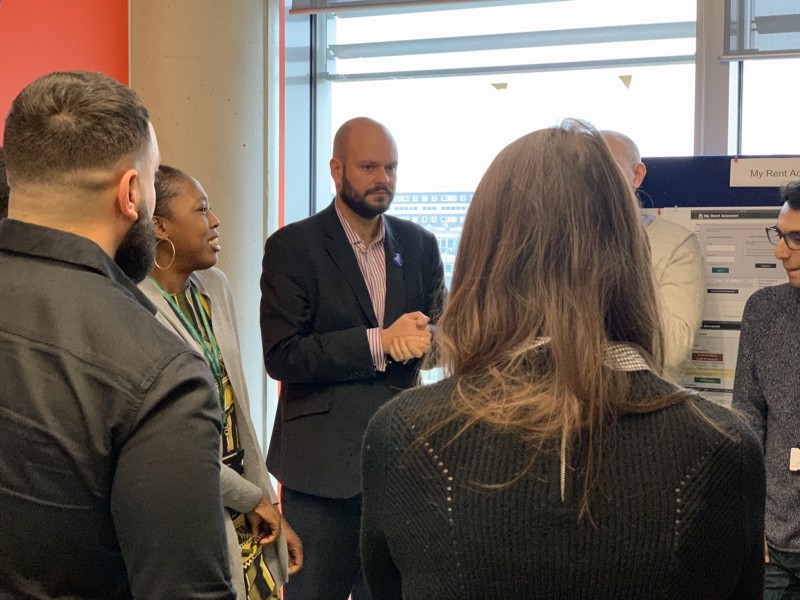
A highlight last week was the Mayor’s visit on Thursday morning to meet our team. I thought this was a good demonstration of the support and encouragement that he’s giving to our work and I enjoyed having the opportunity for people across the team to ask him questions directly.

I was struck by his description of our work as being about social change – not just a technical exercise. There is a growing understanding among politicians nationally (from all parties) of the important role that technology, data and service design have in shaping people’s lives across the communities we serve. I’m really pleased to be working for a borough that’s at the forefront of this.

How we work with our colleagues and moving on from ‘shadow IT’

I had two meetings last week which made me reflect on the concept of ‘shadow IT’ – where people outside of the corporate IT team become more deeply involved with the systems that they and their colleagues use.

Traditionally this would be a cause of great concern and the corporate IT team * would set out to hunt them down and shut down anything they’re doing beyond basic word processing and email. There are valid reasons for us to be concerned about ‘IT work’ happening out of sight of our corporate radar – with plenty of risks to security and good management of systems and information that mean we need to care about this. But I’m mindful that these people are often also the strongest advocates within an organisation of the potential for technology and data to help deliver services more effectively, and there’s lots that we can learn from their ideas and experience of the services they work in.

The conversations last week were really encouraging. One was with some colleagues who’ve leapt at the opportunity to use our new G Suite tools to make it much easier for colleagues in their service to access policy and guidance information that they need when they are on the move. They’ve also got some interesting ideas for ways to extend on this by taking advantage of other parts of the toolkit we’re providing. And the other conversation was with a colleague who is more sceptical about some of the changes we’re delivering. Taking the time to talk through his concerns in more detail and to discuss the longer term direction we’re working towards gave him a clearer sense of the context for the changes he’s worried about and also identified some ways that he can get early access to look at changes which are in the pipeline and see how these will work for his service.

* this is the case for corporate IT teams in most organisations, not just a Hackney thing

Other headlines from my week included:

  • My regular meeting with representatives from the Council’s Unions, where we discussed the findings from the ICT user survey and feedback they’ve had from their members.
  • The monthly Housing services steering group, which looked at how we’ll work together to develop the future plans and investment decisions for this important area of our work.
  • Meeting with the Member Reference Group to have an early conversation about the approach we’ll take for refreshing the IT kit they use (which is looking likely to be next year).
  • Reviewing our capital planning for next year’s budget setting.
  • Working with colleagues in HR to look at the work our team are doing to help update the reporting data they’re provided with and also discuss the next steps in developing our approach to recruiting into our team.
  • My quarterly progress update to Hackney Management Team – I’ll be writing up a separate blog about that shortly and will share the report as part of that.
  • Liz and I met with someone who’d got in touch to discuss ideas linked to Liz’s recent blog post about how we are developing the ethical approach that will underpin our data science work. This highlighted some useful thoughts that we can consider and also assured me that we’re in good shape in terms of the way that we’re thinking about this (making sure that we are considering what we should do, as well as what we could do).
  • And I also had an enjoyable welcome conversation with Micah, who’s recently joined the team as one of our new apprentices.

Something I’m learning

It’s easy to assume that by following the governance pathway in an organisation you can make sure that proposals you’re recommending have broad support and that you get the clear decision that you need to be able to crack on. But it’s important not to forget how important it is to make time to talk with people well ahead of a decision being needed so that you’ve been able to listen to concerns and ideas and reflect these in the proposals. There were two good examples last week which showed that doing this pays off, with decisions being made quickly and easily because people knew that they’d been part of the thinking process.

And there was another example recently where I hadn’t been aware of a piece of work that was happening elsewhere in the Council that I don’t entirely agree with, and I’m now trying to decide how grumpy I ought to be about that. (My feeling is that grumpiness won’t be helpful though, so I think I need to find a smarter approach!)

Weeknote w/c 12 November: taking time to listen

Hi all, I hope you’re having a good week.

Listening to our users

I spent some of my time last week preparing my quarterly update to Hackney Management Team (aka ‘The Board’). I find this a useful opportunity to take stock of what we’re delivering and to ask myself whether we’re focusing on the right things. I’ll publish that next week.

An important part of this quarter’s update was the outcomes from our recent ICT survey, where we asked our users for their feedback on how we’re doing. Cate and Joe’s analysis of this was really helpful and brought out some useful findings that we can reflect in the work we’re delivering. The level of response was great (we had 684 people respond to the survey, which was a significant increase from the 402 responses received in 2017 and close to the 706 who responded in 2016) and I’m very encouraged to see that satisfaction has continued to rise and that we are now scored positively across all but one of the questions we asked people to rate us on (the negative one relates to the very old PC and laptop hardware which we will soon be replacing, so that wasn’t a surprise).

I find that the most valuable part of these surveys is the detailed free text comments that we receive and I spent time reading through all of these. As ever, there are a wide range of different views, ranging from strong positives through to more negative opinions which it’s important we listen to (even if we don’t always agree with them!). The majority of comments reflected the hard work that everyone has been putting in and I felt that overall the balance was a fair assessment of where we are on our journey. Here are a few examples that stood out to me:

‘I joined the council three years ago in October. My first week I could barely get on a computer as the network was down and when I did I found edocs terrible to use. I sat there on my first day, having come from a private company, thinking what have i done? Things are so much better now. The systems and tech difficulties have greatly improved. G Suite makes my work much more efficient. Keep up the good work and keep on introducing modern working techniques!’

‘Nothing ever changes and it seems the only way you get good services is if you work in the main office. The smaller offices are normally forgotten about or left to the last minute.’

‘The ICT team is so much better than it was a couple of years ago. They are proactive and looking at new ways of doing things and are open to ideas from service areas across the Council (rather than pretty much refusing to engage with us in the past and being told what would work for us with no discussion about our actual service needs). The ICT team feels part of the Council now, rather than a completely different service hidden away in a secret building across the road!’

‘I do believe that transformation is now underway, a lot of changes for the better are underway, I do hope ICT realise they have a long way to go! and this survey is a great step towards it.’

I’ve pulled out a number of common themes which I think are the areas that we need to focus on and these will be in the report that I’ll share next week.

Keeping ourselves up to date (aka will there ever be ‘enough’ communication?)

I’ve been giving some thought to communication. In every organisation I’ve ever worked in I’ve heard complaints that communication isn’t good enough and this has been an important area of focus for me since I joined #HackIT in 2016. We use a range of techniques to communicate, including regular weeknotes from across the team; a cross-team Google+ community to share updates and a ‘HackIT Delivers’ community for project updates; weekly strategy stand ups; and also regular updates and show & tells from project teams.

I was interested to hear an observation last week asking whether there might now be too much communication, which made me reflect on how we consume information. Historically project teams produced regular highlight reports, each of which ran to several pages including lots of detail about the projects’ progress, risks and issues. We don’t do these anymore and I wondered whether people might find it helpful to think about communication as a set of user needs and then target how they use the information we’re making available to meet those needs.

So, for example, if one of the user needs is: ‘As a member of the HackIT team I need to keep up to date with projects we’re delivering so that I know what is going on, am able to answer questions that I get asked by users and can identify areas where I need to find out more’ it might be useful to bookmark the weeknotes stream on the HackIT Weeknotes (https://blogs.hackney.gov.uk/hackit/projectweeknotes) and set aside a little time each Monday morning to read the notes that have been posted the previous Friday. These are much more readable than the former highlight report format (which our analytics showed were not well read) and provide a valuable overview of work from across our programme. I used these when I was making sure that I’d covered everything I needed in my HMT report and I found that I was able to get answers to almost all of my questions that way.

I had more focused time in my diary than usual last week, but still managed to cover a range of different topics including:

  • Keeping up to speed with the work to help teams adopt Drive and move their workflows over from the legacy eDocs system. The team are currently focusing on developing consistent approaches for executive support teams and service unit Team Drives so that we can set those up for colleagues quickly.
  • Looking at the work that’s taking place to develop our approach to reporting, in particular the reporting of key data for HR colleagues.
  • Sitting down with some of our Mac users (we have a number in use by design teams in Comms and Regeneration, as well as our digital teams) to talk through ways we can make sure the user experience is consistent and works well.
  • Chairing the inaugural meeting of the Council’s Apprenticeship Steering Group. It’s exciting to be involved with Hackney’s award winning apprenticeship scheme and the progress that’s made is really inspiring.
  • I was also able to take advantage of the new Hangouts Meet video meeting facilities for some of my meetings, which worked very well. This included one meeting with a supplier overseas which I joined from my iPhone.

Something I’m learning

I’ve mentioned before that one of the things I do outside of work is being a school governor. Last week we had our termly meeting of the governing board where we reviewed progress over the last school year and agreed our priorities for the year ahead. As well as this regular meeting I was also involved in a hearing to listen to a complaint from a family who were unhappy with a decision that the school had made.

I’m finding that being a governor is an incredibly valuable learning experience. It’s given me the opportunity to get much closer to an important area of public service delivery, which includes learning about education policy, approaches to teaching and learning and also how schools support families with all manner of complex life circumstances. And it’s also given me a glimpse into the sorts of things that our elected Members have to do in their roles. I would thoroughly recommend it to anyone who has the opportunity.

Weeknote w/c 5 November: new thinking about governance and architecture, plus a backlog that’s…

Last week was brisk and it felt like Friday arrived rather quickly!

Governance and architecture

Early on in the week we grabbed a bit of time as a management team to check in on the work to develop our governance and architecture thinking. This is really important because we need to be able to give teams who are delivering new digital services clear guiderails that they can use so that they know that they’re making decisions that fit with the direction we want to take. We’re committed to reusing existing standards (such as the Technology Code of Practice) where possible, but we know that we also need to make sure that we’ve explained how the thinking comes together so that it’s clear for the people who need to refer to it.

We’ve decided that if we want to be user centric we need to start with user needs. So we’ve made a start at bringing those together in this doc: https://docs.google.com/document/d/15vOuxEWZv7YY-rRfu5u3dNKYhdQysVSijN3sH8UxnWs/edit?usp=sharing. The doc is shared for commenting, so any feedback or suggestions would be very much appreciated!

(Our architecture team also delivered a show and tell this week to share the thinking that’s going into moving us to a ‘web first’ network model: https://docs.google.com/presentation/d/1turLuoq9VfPqK5bRSxUqJ9rZZd5Q3J_bGDmBXrpLVgc/edit?usp=sharing. I was really pleased to see them extend the invitation to a range of colleagues and contacts from beyond Hackney – helping us to test out our thinking and direction.)

Backlog busting

Our Service Support team have been leading work to tackle the backlog that had built up in support and request management across our service. I mentioned in my note for w/c 24 September that this was being planned carefully to make sure that we didn’t just make the stats look good without also making sure that we had met our users’ needs (healthy looking graphs are of no value at all if they are just masking lots of frustrated users who’ve been told that we’ve closed their call without actually getting the thing they needed sorted).

We checked on progress at our management team meeting last week and I was really pleased to see that the backlog has been reduced by c 74% and is continuing to fall. And I was equally pleased to see that overall satisfaction with the quality of service has risen while the number of users escalating their issues hasn’t. The only negative progress was the satisfaction with the timeliness of our response – which isn’t a surprise as we’ve been working through things that have taken too long to resolve.

Overall this is a really positive piece of progress and it was great to hear how the team are continuing to work on this to make sure that the improvement is sustainable for the long term and we keep pushing ourselves to further improve the user experience we offer.

As ever, the week covered a healthy range of other topics too:

  • We began the week with the quarterly Information Governance Group meeting, where we checked in on our work to apply the principles set out in the General Data Protection Regulation to our work here in Hackney and noted the really positive progress with making sure that our systems and processes are helping us to keep secure.
  • Henry and I caught up with finance colleagues to look at ways that we can apply ‘digital’ thinking to the Council’s finance processes. This reminded me how glad I am to work somewhere like Hackney where the ambition to use technology, data and service design to make things work better for users is widely supported across the organisation.
  • The Council’s Brexit working group met to discuss the developments for the UK’s exit from the EU and the preparations that the Council needs to make.
  • I joined the regular bi-monthly meeting of the steering group for our local health and social care Sustainability and Transformation Partnership, catching up with progress to join up data and processes across a wide range of NHS and local authority partners so that we can help people live healthy lives across East London.
  • We continued our work to clarify our plans to support effective information sharing and management using the new productivity tools that we’ve been rolling out. I think we’ve managed to distill our policies for this down to three key questions which will work for most user needs, with more detailed discussion needed for colleagues whose needs are more complex. The next step is for the team to write this up and test it out with real users.
  • I had a really good workshop with colleagues from the Council’s Emergency Planning team, looking at the toolkit we’ve set up to help them manage major incidents. I enjoyed taking some time to do ‘real work’ and it was very rewarding to work with them to find simple and quick ways that their important work can be made easier to manage.
  • Our mid-year check in on our finances continued, with a focus on capital this week. I’m very grateful to Ramesh, who leaves Hackney this week, for the hard work that he’s put in with the budget managers across our team so that we have a clear position that will help us decide where we need to focus our efforts.
  • And this week’s welcome intros with new members of the team were with Darrell, Erdem and Nana, who’ve joined as infrastructure apprentices, Amy, who’s joined our information management team, and Philippa, who’s joined our Delivery team (and who appears to share my enthusiasm for better governance). I’m really pleased to see the energy and ideas that our new starters are bringing and the way that they’re already helping to shape our development as a team.

Something I’m learning

Something that I always find tricky is getting the right balance between being sufficiently engaged in the detail to have a good knowledge of the issues our team are working on while also staying true to our HackIT manifesto principle of ‘Trust the team’. There have been a few examples this week where I wished I’d got closer to the detail sooner, but these are minor compared with the many more examples that show how much people can achieve if they’re given the space to explore and innovate. This runs against my control freak instincts, but I’m going to keep reminding myself how important it is to make sure that I resist the urge to micro-manage.

Trust the Team, from the HackIT manifesto: http://hackit.org.uk/how-we-work/hackit-manifesto