So, after 18 years working in local government, the time has come to try something new. I’m beyond excited to be joining the incredible team at public.digital, and I’m really looking forward to being part of the work that public digital does supporting organisations through radical transformation.
In the brief gap between wrapping up at Hackney and starting my new role I found myself mulling over what I’ve learned in my time working for local councils and the challenges and opportunities ahead for 21st century local authorities.
Public service that really matters
Local government is at the sharp end of public service delivery. The variety of work that councils do is incredible, and often I find that people have very limited understanding of how many different services council teams deliver and how many aspects of citizens’ lives councils play a part in.
Having started my career in retail, where there was a clear ‘golden thread’ that tied together all parts of the company’s work, one of the things that struck me from my earliest days of working in a council was how very different the work of prioritising and focusing is in an organisation that delivers hundreds of different services – all of which matter deeply to huge numbers of people.
The challenges of prioritisation are acute when the trade offs which need to be made are between services that are important to hundreds of thousands of people against services that are relied on by much smaller numbers of people but where the consequences can actually be life or death decisions. The ask of elected Members and council officers in managing that balancing act really is something else.
People who make real impact
As with anything that involves making decisions and delivering complex services while working together with lots of other people, I’d be lying if I didn’t acknowledge that working in local government is full of frustration. Why can’t things which seem simple just happen? Why do so many processes need to be battled through to get decisions made?
But I’ve also been privileged to work with some of the most inspiring people that I’ve ever met, all driven by a powerful sense of public purpose. Sometimes that brings them into disagreement with one another, but the motivations are almost always genuinely well intentioned and driven by wanting to deliver for citizens.
Across every council I’ve worked in, colleagues and Councillors (of all parties) have shown up every day determined to do their very best for residents, even when the circumstances outside their control mean that their best efforts can only fall short of what they actually wish they were able to achieve. And I have never envied the challenges that elected Members face in making and explaining the decisions that need to be taken when they need to consider so many competing opinions and also balance the books every year.
The myth of the Town Hall
While in many ways the grand edifices of Town Halls and Civic Centres across the country speak to the value that our predecessors had for their public services, I think the bricks, mortar and Portland stone also suggest a much more tightly integrated entity behind the scenes that is actually the case. I’ve tended to see each council more as a confederation of small businesses, as I felt that better reflects the role that persuasion and influencing plays in getting things done in a local authority (as opposed to the ‘simple’ top down management that might be expected).
Perma-crisis is hard
Since I started in local government in 2006 almost all of our focus has been on savings and working to improve the quality of services while spending less money. I would challenge anyone in any business to claim that they are genuinely 100% efficient and there are undoubtedly many (many) ways to work smarter or alternative choices for how money is spent. But there comes a point where ‘less means less’ – especially when external factors driving exponential demand for essential services mean that the money left to pay for ‘discretionary’ services like parks, libraries, frequent bin collections, clean and well maintained streets, community facilities, culture and public events is decreasing far faster than the top line budget would suggest.
And when you then lob in further challenges like pandemics, unexpected emergencies, and ever growing regulation and oversight (which all too often seems disconnected from the real world) the work of delivering long-term sustainable service improvement and transformation is really hard.
Seeing residents putting up banners thanking Council officers for helping them stay safe, fed and connected during the Covid-19 lockdowns, reading feedback from residents who colleagues have helped with stark challenges of poverty and homelessness, and watching ‘back office’ teams pulling together to make sure that thousands of colleagues could carry on delivering despite the huge disruptions everyone had to deal with due to lockdown were some of the most inspiring moments in my working life. (As an aside – this is exactly the reason why I loathe the term ‘back office’, which I find disrespectful towards folk who do this important work that makes the ‘frontline’ work possible.) And we also demonstrated how crises could be turned into opportunities to leap forward far faster than was ever the case in calmer times.
But it’s also true that stepping back and seeing the longer view becomes increasingly difficult as time goes on. And a fundamental challenge facing local government leaders is to harness the power of people’s public service values when the demands they’re juggling naturally lead to a tendency towards an emphasis on self preservation.
But our residents deserve us to keep pushing for better
Something being hard isn’t a reason to stop trying. While many of the barriers facing councils may be beyond their direct control, there are without doubt important steps that can be taken to empower councils to take on the challenges and change some of the fundamentals – even if some of those are steps which central government would need to take (or where central government not doing things would make an important difference).
The case for ‘boring’ government and some things that can be done
Many of the steps that would make the biggest difference are actually the least eye-catching and therefore hard to sell to the public. But tackling these is of fundamental importance to making the progress needed and delivering the public value that is, after all, why we are all here.
Here are 5 things we should do differently which I think would make a big difference.
- Avoid the seduction of magic bullets and design funding in a way that supports the delivery of long term change
Many of the challenges that councils face are complex and deep rooted. It continues to puzzle me at how common it is to look for quick and simple ways to fix these.
Whether that’s magic new tech that will somehow solve all our problems (looking at you gen AI… 🙄) or flashy grant funding initiatives, too often these become a distraction from the hard graft of delivering long term sustainable improvements. At their worst, they can even make things worse by injecting funding in the wrong places and reinforcing barriers to the real shifts needed (for example, adding complexity to legacy tech, rather than investing in moving to more modern and flexible platforms).
Reliance on capital / project funding also reinforces this by creating an environment where everything ends up having to be like a construction project, even when what’s needed is experimentation, iterative learning and continuous investment in services. My new colleague Audree has written a brilliant piece about how this could be done better: beyond programmes: changing how we change in the public sector.
- Invest in making the paradigm shift that will put councils in a position to deliver real and ongoing change
One of the challenges caused by the project and programme approach is that councils are then left to maintain their new services and infrastructure without the resources needed to keep up with wider change. Over time these atrophy and the new ‘legacy’ emerges, with heirs and successors wondering what their predecessors could possibly have been thinking when they were doing their work.
The example of local government technology is a case in point. Far too often council IT teams and staff are grappling with systems that would have been typical of the 1990s and early 2000s, but are dangerously out of date in the modern internet and mobile era (let alone the metaverse / spatial computing, cyber threats and AI etc…). Changing this requires concerted effort and investment, but left to individual councils and a vendor market that is anything but dynamic the pace of change is frustratingly slow. From time to time green shoots emerge, but the ‘everyone else uses X or Y, so we should too’ inertia all too often stifles them before they’ve had a chance to properly take root.
- Embrace purposeful collaboration
The 300+ councils in England and Wales carry out very similar functions, so it seems obvious that they should be working together much more closely than is usually the case. But that doesn’t take account of the huge number of factors that will (in my view) always make any large scale integration punishingly difficult to get off the ground and sustain. Having led a shared service that is still thriving 11 years after it launched (and 8 years after I left) I know that it can be done, but am also acutely aware of how rare that is and how much effort is involved in maintaining that alignment across 3 organisations, let alone 300.
While the ‘should there be a GDS for local government?’ question continues to bubble up (I’m sceptical, and surprised to find that it’s ten years since I posted my thoughts on that: https://bytherye.com/2014/07/04/one-local-gov-digital-some-further-thoughts/), I think there are some models that can definitely help bring energy and momentum to collaboration, while also recognising the context which makes a single integrated whole unlikely to work.
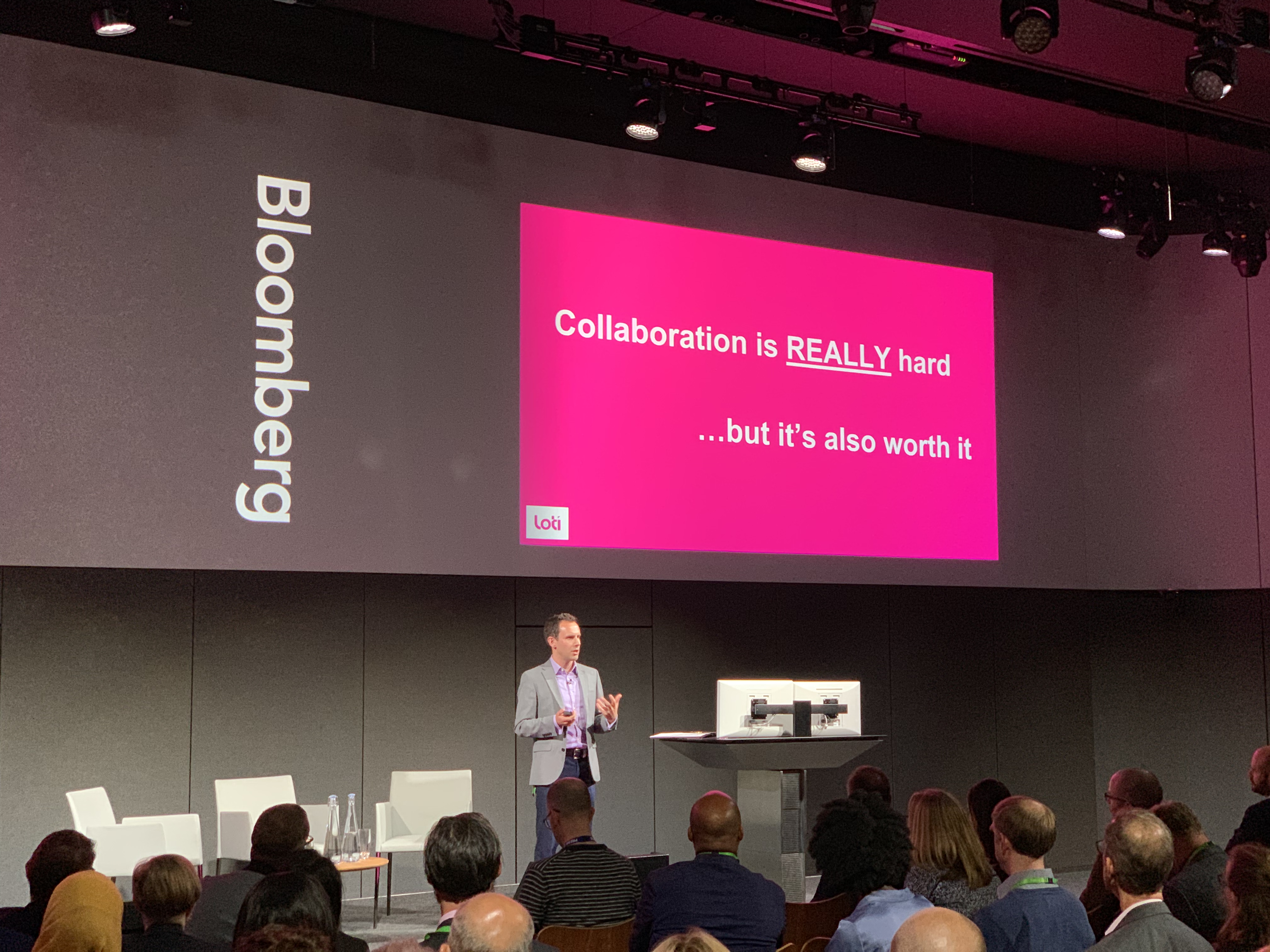
I was proud to be one of the founding members of the London Office of Technology & Innovation (https://loti.london/), a shared innovation service that is helping London’s councils drive forward change. It’s been really exciting to see how the LOTI team has grown in impact and membership (councils made a financial commitment to LOTI and only joined up if they saw the value in that investment – LOTI started with 15 councils signing up and 28 of London’s 33 authorities are now members). I think there’s huge value in this sort of regional collaboration, with members making a real (including £) commitment to put a team in place that can drive the shared innovation forward.
- Rethink regulation and focus on outcomes, not activity
Like most public bodies, councils exist in a complex regulatory environment, with external regulators and ombudsmen making sure that services are being delivered to the standard that the public expects and holding the councils accountable. It’s hard to argue against that, and I can’t see a world where councils operate without some form of independent accountability.
But the role that this has in holding councils back from the sorts of innovation needed to meet the challenges of the future is often missed. Simplistic and poorly designed measures, targets and compliance can all too often result in a distraction from making much needed change happen and act as a perverse incentive when decisions are being considered.
I often wonder how this might be different if regulators were also part of the mission to drive the radical change in public service that we need, and were themselves assessed on how they are incentivising that and helping to create the right conditions for innovation.
- Remember that collective buying power only works if you show you mean it
One of my unresolved frustrations from my time in local government was how often I’d hear discussion about how we should use our collective buying power to push our suppliers to give us more competitive pricing, and then the collective surprise and disappointment to discover that the changes were only ever in an upwards direction.
While local authorities do have significant spending power (a large London council will turnover something upwards of £1Bn each year – although a lot of that is money that is paid out directly through benefits, schools grants etc), using that to achieve actual bargaining power over the market requires a real and visible willingness to buy differently. Sadly, much of the supplier market (especially the technology market) is very narrow and as a sector there is a real need to shift that.
Procurement routes like the Digital Marketplace and G-Cloud have made a big difference, but they need continued care and attention to make sure they’re still working successfully to bring in a wide range of potential partners. But the single biggest thing needed is for councils to challenge the status quo and show they will take purposeful action to bring in new suppliers and create conditions where embedded suppliers know they can’t be complacent.
Technology wasn’t solved in 2005. It continues to surprise me that so many assumptions are made which forget that we were able to innovate in the past and how often what is taken as read now was once innovative. There is a real need to relearn the willingness to be radical.
None of these lend themselves to an exciting rallying cry or press release, but together I think they would make a huge contribution to tackling the underlying barriers to delivering the services that our citizens truly deserve.

 bytherye